CC vs BCC: When To Use Each in Email
Learn cc vs bcc email rules with real scenarios, templates, and etiquette to avoid privacy leaks, reply-all chaos, and visibility CC mistakes.
CC vs BCC in email: what each field does and when to use it
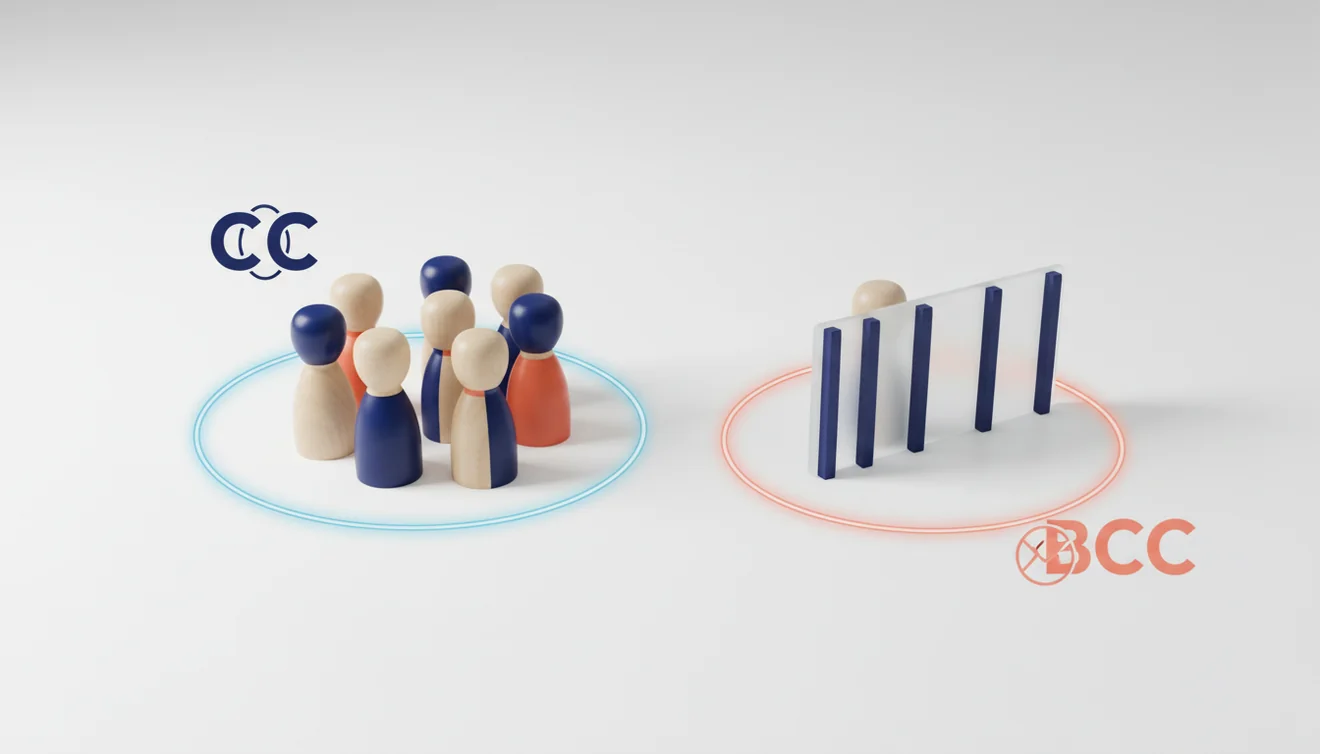
CC copies additional recipients and shows their addresses to everyone on the email. BCC copies additional recipients and hides their addresses from other recipients. CC is used for transparency, and BCC is used for privacy or controlled distribution.
The fastest way to start an argument in an office is to use BCC and pretend you did not. The second fastest is to CC someone’s manager “just for visibility” when the issue is still fixable in a two-line reply. I have watched both happen. One causes trust problems. The other causes defensiveness. Same email client. Different outcomes.
This topic sounds basic until you are the person hitting Send on a vendor escalation, a layoff-related update, or a customer list you promised not to expose. Then “cc vs bcc email” stops being trivia and starts being risk management.
The part nobody tells you: CC and BCC are social signals, not just fields
CC is not neutral. It broadcasts: “I want these people to see this conversation, and I am okay with you seeing that they are watching.” In a healthy team, that can be supportive. In a tense one, it reads like pressure.
BCC is also not neutral. It broadcasts something too, just not to everyone. It says: “I am controlling who knows what.” Sometimes that is responsible. Sometimes it is political. Your recipients do not need to see the BCC list, but they can feel the consequences of it when replies go sideways or when someone mysteriously references a detail they were not copied on.
What CC does well (when it works)
- Creates shared context. I use CC when a project thread is about to fork. Example: the designer needs to see the decision the PM is making, not hear it secondhand.
- Documents decisions. If someone later asks “who approved this,” CC shows the approval path without digging through chat logs.
- Reduces forwarding. When people are left off, they forward. Those forwards usually lose nuance and add commentary.
What BCC does well (when it works)
- Protects addresses. Customer announcements, volunteer lists, parent groups, alumni updates. This is the obvious one, and it still gets messed up weekly.
- Prevents reply-all storms. If 150 people can reply-all, someone will. They always do.
- Allows quiet monitoring. Sometimes compliance or an assistant needs visibility without becoming part of the thread.
Users should verify recipient lists and privacy requirements before sending any message to multiple external contacts. One accidental CC can disclose personal data, contracts, or a customer relationship you cannot repair with an apology.
Three common “cc vs bcc email” situations I see every week (and what I send)
1) Introducing two people and staying out of the way
The mistake: CCing your whole team on a two-person intro, then everyone feels invited to weigh in. Or BCCing both parties, which can feel sneaky if they later realize they were blind-copied.
What works for me: direct To for the two people. CC only if someone truly needs to see the handoff.
Subject: Intro: Priya (Ops) and Marco (Finance)
Email body:
Priya, meet Marco. Marco owns vendor payments and can help with the invoice timing question.
Marco, Priya leads ops for the rollout and has the PO details.
I’ll let you two take it from here.
If I need my manager to see that I made the connection, I CC them. Not because they need to participate, but because it prevents a later “did you loop Finance in?” check-in. That said, I keep the CC list short. One extra watcher changes the tone.
2) Sending an update to a distribution list of customers or members
The mistake: putting everyone in CC “so they can see each other.” Unless your audience explicitly opted into that visibility (for example, a small committee), it is a privacy leak waiting to happen.
What I actually do: put my own address in To, put recipients in BCC, and make the email read like a broadcast.
To: me@company.com
BCC: list of recipients
Opening line that reduces confusion:
You’re receiving this update because you signed up for service notifications.
Then I add one line that preempts the inevitable reply-all instinct: “If you have questions, reply directly to me.” People follow instructions when they are obvious and early.
If you want help drafting these without sounding like a robot, an AI Email Generator can produce a clean broadcast tone quickly. I still rewrite the first sentence every time, because that sentence sets trust.
3) Escalations and “visibility” CCs (the landmine)
I have seen a simple vendor delay turn into a weeks-long relationship freeze because someone CCed the vendor’s VP too early. The sender thought they were being efficient. The vendor read it as a threat.
Here is my rule: CC for visibility only after you have done one private attempt to resolve, and only if the CC’d person can actually help. “FYI” CCs that cannot act are just spectators. Spectators raise the temperature.
Phrase I use when CCing a leader carefully:
Adding Jenna for awareness since this impacts the launch date. Jenna, no action needed yet. We’re aiming to confirm revised delivery by Thursday.
That “no action needed yet” line is small, but it changes the whole room. It signals you are not trying to get someone in trouble. You are managing risk.
How I decide between CC and BCC in 30 seconds
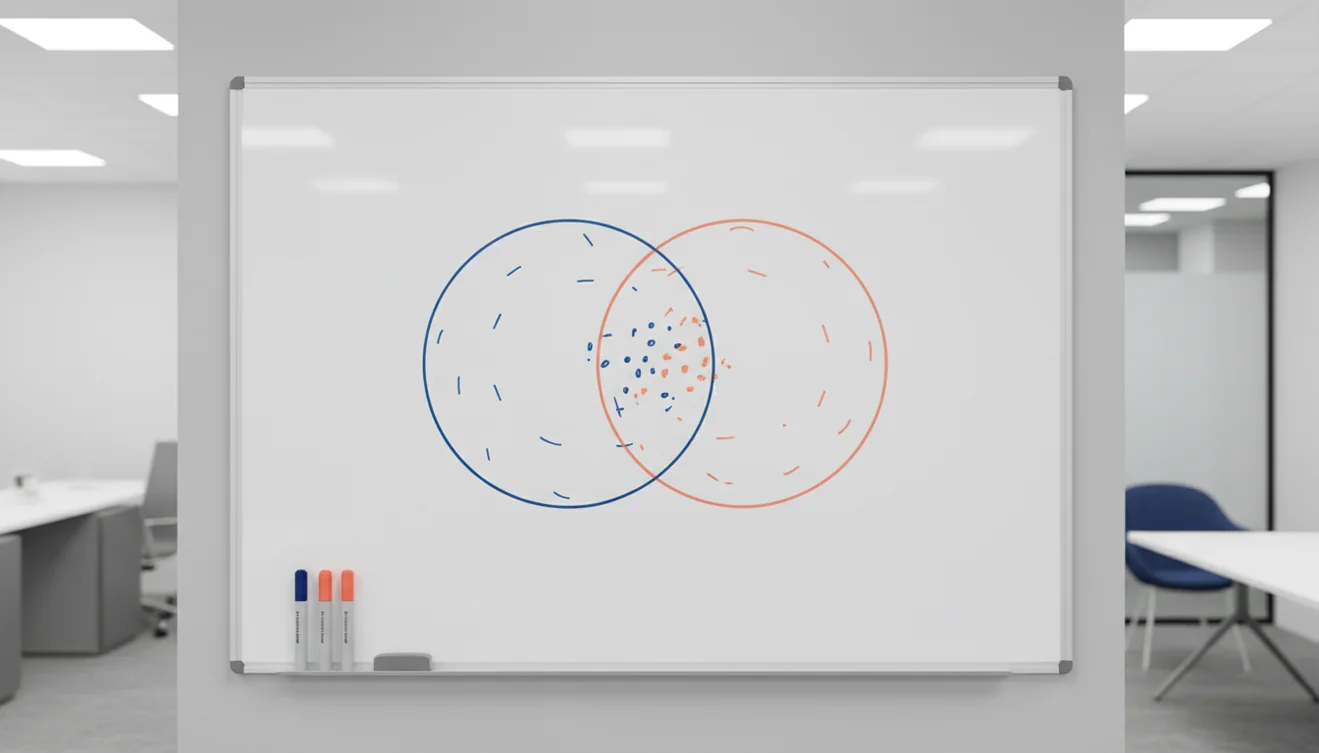
If I have even a hint of uncertainty, I run this quick checklist. It keeps me from the two classic mistakes: exposing addresses and creating accidental pressure.
- Do recipients expect to be visible to each other? If no, BCC or use a mailing tool.
- Will anyone on the list feel monitored? If yes, reduce CC or explain why they are included.
- Is a reply-all useful or harmful? If harmful, BCC and direct replies to a single inbox.
- Can every copied person add value? If not, leave them off. Noise kills action.
- Would I be comfortable if the CC/BCC choice was forwarded? If not, rethink the approach.
A note about BCC “secret witnesses”
People love BCCing a manager as a quiet shield. Sometimes it is justified (harassment documentation, repeated missed commitments, compliance reviews). More often, it is a shortcut around a hard conversation.
If you BCC someone for documentation, make that decision deliberately. And remember: some systems and plugins can expose BCC in unusual ways (CRM syncing, ticketing tools, or forwarded message headers). Do not rely on BCC as a guarantee of secrecy. Treat it as a privacy tool, not an invisibility cloak.
CC/BCC etiquette that prevents the awkward follow-up emails
Use “To” for ownership
In threads that involve action, I keep exactly one owner in To when possible. Everyone else goes in CC if they need awareness. That makes it obvious who should respond. It also stops the “I thought you had it” silence.
Write for the people you copied
CC adds readers. Readers change what you should write. When I CC a legal contact or finance partner, I add one sentence of context they can understand without reading ten emails below:
Example context line: We are confirming whether the renewal can be signed this week so billing starts April 1.
Do not weaponize CC
If your real message is “I am frustrated,” do not translate it into “Looping in leadership.” That is how teams learn to fear email. If you need a firmer tone, state the expectation plainly:
Plain, firm line: Please confirm by 3 PM ET whether you can deliver by Friday. If not, I will move forward with the alternate supplier.
For structured workplace messages like this, a Business Email Generator can help you keep the wording crisp without slipping into sarcasm. I still check every detail, especially deadlines and names.
Mini templates I reuse (and the small edits that matter)
Template: BCC announcement
Subject: Schedule update for March deliveries
Body:
You’re receiving this email because your address is on our delivery update list.
March deliveries will shift by one business day due to carrier capacity.
If you need to change your delivery date, reply to this email and include your order number.
Template: CC for visibility without pressure
Subject: Status: API access for Acme
Body:
Jordan, can you confirm whether Acme’s API key can be issued today?
CCing Lin for awareness since Acme is waiting on access to start testing. Lin, no action needed unless this slips past today.
Template: “Please remove me from CC” (polite, fast)
I send this more than I should. It saves time and it is not rude.
Body:
Thanks. I’m not needed on this thread. Please remove me from CC, and loop me back in if a decision is required from my side.
One last reality check before you hit Send
If your email could end up forwarded to a customer, a regulator, or HR, your CC/BCC choice is part of the record. I open the compose window, add my recipients, then pause and read the header line by line. To. CC. BCC. Attachments. Only then do I write the body. It feels backward, but it prevents the “Oh no, I copied everyone” moment.
If you want help drafting the body after you set the right recipients, AI Email Writer tools can speed up tone and structure. The judgment call on CC vs BCC is still yours. That judgment is what keeps relationships intact.