Free Follow-Up Email Generator
Describe the original message and situation, choose the follow-up type, and get a tactful, ready-to-send draft.
What Is a Follow-Up Email Generator
A follow-up email generator is a tool that creates email drafts for messages sent after an initial communication has not received a reply or after an event such as a meeting, interview, or application. It produces structured follow-up messages with appropriate tone escalation, context references, and clear next steps based on the user's description of the situation.
Following up is the part of email communication that almost everyone gets wrong. Not because the writing is hard, but because the psychology is uncomfortable. You sent a message. The person did not respond. Now you have to send another message acknowledging, implicitly, that you were ignored. Most people handle this discomfort in one of two ways: they never follow up at all, or they wait so long that the follow-up feels weird and disconnected from the original context. Both approaches kill opportunities.
Here is the thing that changed how I think about follow-ups. The data is unambiguous. Research from multiple sales and recruiting studies shows that 80% of deals require five or more touchpoints to close, but 44% of salespeople give up after a single follow-up. In hiring, candidates who follow up after interviews are statistically more likely to receive offers. Not because the follow-up itself is magical, but because it signals persistence and genuine interest in a world where most people default to silence.
Timing: The Variable Nobody Gets Right
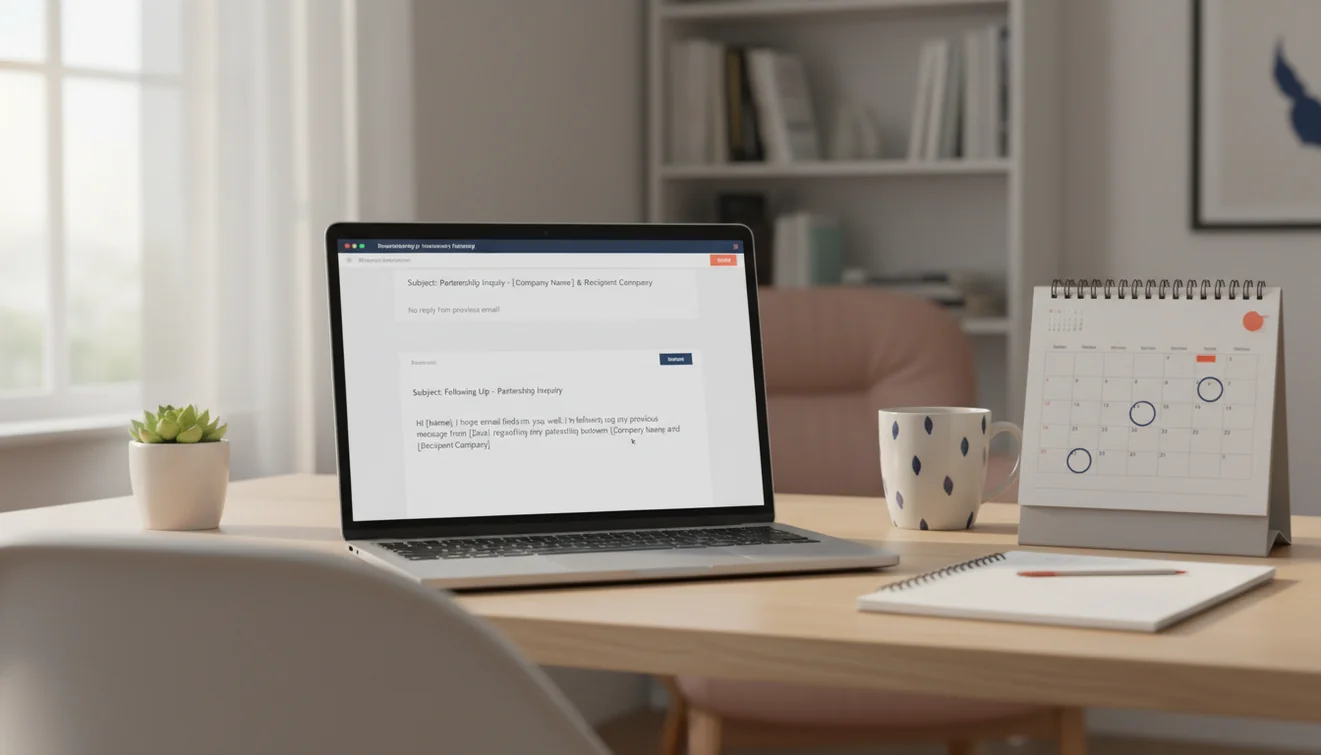
Three days. That is the sweet spot for most business follow-ups. Less than two days feels impatient. More than five days and the recipient has already moved on mentally. The email sits in their inbox like a piece of mail they meant to open but never did, and by the time your follow-up arrives, they have to reconstruct why you emailed in the first place.
But timing depends on context in ways that generic advice ignores. Following up on a job application? Five to seven business days. The hiring process moves slowly and checking in after 48 hours makes you look anxious. Following up on a time-sensitive proposal? Two days is fine. The recipient knows there is a deadline and your follow-up reinforces urgency without creating it artificially. Following up after a meeting? Within 24 hours. Post-meeting follow-ups are not really follow-ups at all. They are relationship maintenance, and the window for them is narrow.
The After Meeting option in this tool is calibrated for that 24-hour window. It produces emails that reference the meeting, summarize key takeaways, and establish next steps. Not a transcript of what was discussed (nobody wants that), but a concise confirmation of what was agreed and who is doing what. I have seen this single email type prevent more miscommunication than any project management tool.
First Follow-Up vs. Second Follow-Up vs. Final Attempt
Each follow-up in a sequence serves a different purpose, and using the same approach for all of them is a common mistake. The first follow-up assumes good faith. The person was busy, your email got buried, they meant to reply and forgot. Your tone should reflect that assumption. "Wanted to make sure this didn't get lost in your inbox" works because it gives the recipient a face-saving reason for not responding.
The second follow-up shifts. You are no longer assuming they missed your email. You are acknowledging, politely, that they have not prioritized it. This is where you restate the value or relevance of your request. Add a new piece of information they did not have before. Reference a deadline that is approaching. Change the framing slightly so the email does not feel like an exact copy of the first one. The Second Follow-Up option handles this escalation well because it adjusts the directness without crossing into pushy territory.

The third follow-up, if you send one, should be a graceful exit. "I understand you may have other priorities right now. I will close the loop on my end, but feel free to reach out if this becomes relevant later." That framing does two things. It removes pressure from the recipient, which paradoxically increases the chance they respond. And it preserves the relationship for future outreach. Burning a bridge over an unanswered email is never worth it.
The After No Response Problem
The After No Response option addresses the most common and most dreaded follow-up scenario. You emailed someone. They did not reply. Now you need to try again without sounding desperate, annoyed, or passive-aggressive. This is harder than it sounds because the emotional undercurrent of "why didn't you respond to me" is difficult to suppress entirely.
"Per my last email" has become a meme for a reason. It is the professional equivalent of "as I already told you," and recipients read it exactly that way. The generator avoids that trap by producing follow-ups that reference the original topic without the implicit accusation. It restates the request, adds a small amount of new context, and closes with a specific, low-effort action item. "Would a brief call work better than email for this?" gives the recipient an alternative channel and signals flexibility rather than frustration.
One pattern I have noticed in my own follow-up practice: the emails that get the most responses are the ones that make it easy to say yes. Instead of "Let me know your thoughts on the proposal," try "Would Tuesday at 2 PM work for a 15-minute call to walk through the key points?" Specificity reduces the cognitive load on the recipient. They do not have to figure out what you want. They just have to check their calendar.
Follow-Up Emails for Job Seekers
Job application follow-ups operate under different rules than business follow-ups. The power dynamic is asymmetric. You need something from the recipient more than they need anything from you, and that imbalance affects every word choice. Overly casual follow-ups feel presumptuous. Overly formal ones feel desperate. The After Application option finds the middle ground: professional, brief, and focused on expressing continued interest rather than demanding a response.
Post-interview follow-ups are actually the easiest to write well because you have specific content to reference. "Thank you for taking the time to discuss the marketing director role yesterday. The conversation about your Q3 expansion plans was particularly interesting." That specificity proves you were engaged and paying attention. Generic thank-you notes ("It was great meeting you and learning more about the company") say nothing and are forgotten immediately.
If you are following up on an application that has gone silent, keep it to three sentences. State the role you applied for. Express continued interest. Ask if there is an updated timeline. Anything longer and you are overinvesting in an email that may never be read by the person making the decision. The cold email generator can help with initial outreach to hiring managers, and the email reply generator handles responses to interview scheduling or offer communications.
Building Follow-Ups into Your Communication System
The most effective communicators I know do not treat follow-ups as exceptions. They treat them as expected parts of every outreach sequence. When they send an initial email, they already know that a follow-up will go out on day three and a second on day seven if there is no response. This mindset removes the emotional friction. You are not "pestering" someone. You are executing a planned communication sequence.
Pair this tool with the business email generator for the initial outreach, then use the follow-up generator for the subsequent messages. The professional email writer works well for formal follow-ups with executives or external stakeholders. And explore the full suite of AI email tools on Fly Email to build a complete communication workflow from first contact through ongoing relationship management.
Limitations and Safety
The follow-up email generator applies general communication conventions for follow-up messaging. It does not have access to the original email thread, the recipient's response history, or the relationship dynamics between sender and recipient. Output represents a competent starting point that requires human judgment about timing and appropriateness.
Follow-up emails related to legal proceedings, debt collection, employment disputes, or regulatory matters should not be sent based solely on AI-generated content. These communications have legal implications that require review by qualified professionals.
The tool does not track how many follow-ups have been sent or manage sequences across multiple messages. Users are responsible for tracking their own follow-up cadence and determining when continued outreach is no longer appropriate.
EmailAI.me does not store or retain any content submitted through the follow-up email generator. All processing occurs in real time with no server-side data retention. See the Privacy Policy for details on data handling.
Follow-Up Email Generator App
The Follow-Up Email Generator tool is available as part of the Fly Email app for iOS and Android. The app includes all email writing, reply generation, and proofreading tools in a single download with no account required.
Fly Email provides the same AI email capabilities available on EmailAI.me. Users receive 10 free generations per day on the website, while the app offers extended access through optional subscription plans.